-
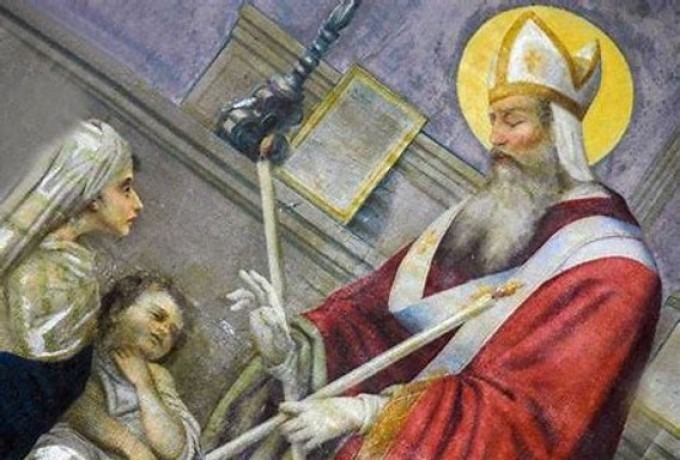 Blessing of the Throats will take place after all masses this Saturday/Sunday, (Jan 31st/Feb 1st)
Saint Blaise was the bishop of Sebastea and a doctor. The first known record of the saint’s life comes from the medical writings of Aetius Amidenus, where he is recorded as helping with patients suffering from objects stuck in their throat. Many of the miraculous aspects of St. Blaise’s life are written of 400 years after his martyrdom in the “Acts of St. Blaise.” Saint Blaise is believed to begin as a healer then, eventually became a “physician of souls.” He then retired to a cave, where he remained in prayer. People often turned to Saint Blaise for healing miracles. In 316, the governor of Cappadocia, Agricola, arrested then-bishop Blaise for being a Christian. On their way to jail, a women set her only son, who was choking to death on a fish bone, at his feet. Blaise cured the child, and though Agricola was amazed, he could not get Blaise to renounce his faith. Therefore Agricola beat him with a stick and tore at his flesh with iron combs before beheading him.
In another tale, Blaise was being led to prison in Sebastea, and on the way came across a poor old woman whose pig had been stolen by a wolf. Blaise commanded the wolf return the pig, which it did—alive and uninjured—to the amazement of all. When he reached Sebastea, the woman came to him and brought two fine wax candles in an attempt to dispel the gloom of his darkened cell. In the Middle Ages, Blaise became quite popular and his legend as a beast tamer spread. He was then referred to as the “saint of the wild beast.” Saint Blaise is often depicted holding two crossed candles in his hand, or in a cave with wild animals. His feast day is February 3rd. www.catholic.org/saints